Story Cycle: Community Imagination and Imaginary Community
聯篇故事與社區想像
Spring, 2007
A Seminar with Prof. Chen Chi-szu
Email: kiss7445@mail.tku.edu.tw
Homepage: http://mail.tku.edu.tw/kiss7445
Office: FL632 , Tel: ext. 2966
Latest Update: 2007/03/04
Visitors
Since 2007, 3, 2
| Home | Syllabus | Reading Schedule | Bibliography | Response Entries
|
Paper Topics |
|
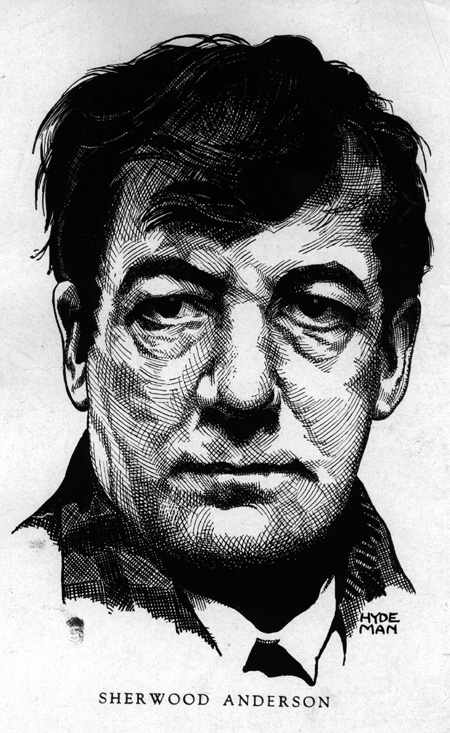 Sherwood Anderson |
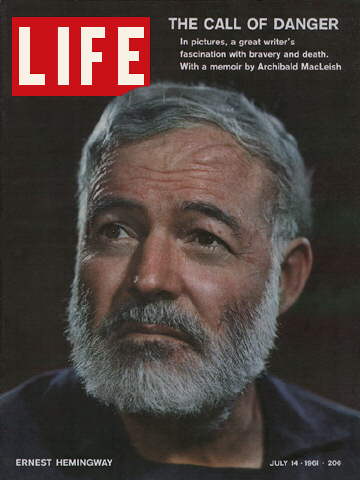 Ernest Hemingway |
William Faulkner |
 Sherman Alexie |
 Louis Erdrich |
 Sandra Cisneros |
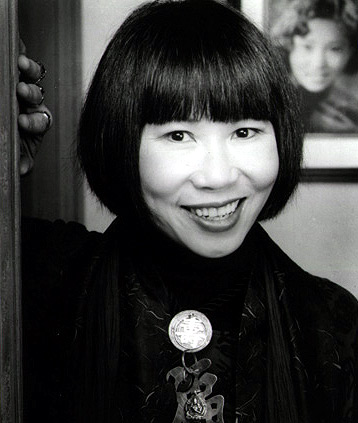 Amy Tan |
 GeraldVizenor |
Course
Description:
This seminar is a critical reading of
representative place-based story cycles. A “story cycle”, or variously named as
story chronicle, anthology novel, paranovel, or composite
novel, is a collection of stories arranged by the author to be read
sequentially as a whole. The unity of theme and landscape, the continuity and
development of a main character, and the variety of characters and events
related to the main character in a congenial place, make “story cycle” a unique
narrative genre in examining the development of subjectivity and community
value.
In this
seminar, we will analyze five post-War representative
place-based story cycles by multicultural authors, including Louise Erdrich’s Love Medicine (1984), Sandra Cisneros’s The House on Mango Street (1984), Amy
Tan’s The Joy Luck Club (1989),
Gerald Vizenor’s Landfill
Meditation: Crossblood Stories (1991), and
Sherman Alexie’s The Lone Ranger and
Tonto Fist Fight in Heaven (1993). We will then compare the five representative
story cycles with canonized story cycles by American authors, including Sherwood
Anderson’s
The themes of this study include (1) analysis of setting: the description of the setting will be related to the specific ideology of a community (pastoral and anti-pastoral, utopia, dystopia, and ecotopia); (2) analysis of characterization and subjectivity: the characterization in story cycle will be examined with references to the role of the individual in a community and his/her responsibility related to his/her value in a community; (3) analysis of action: narrative types (apocalyptic narrative, risk narrative, survival narrative) will be cross-examined with reference to current scholarship on environmental criticism. In weaving an ecocritical discussion of these story cycles, recent literary scholarships on Narratology, Postcolonialism, and Postmodernism will be introduced to the quilt of discourse.
Required
Alexie, Sherman. (1993). The Lone Ranger and Tonto Fist Fight in Heaven.
Harper Perennial, 1994.
Anderson,
Sherwood. (1919).
Cisneros, Sandra. (1984). The House on
Erdrich, Louise. (1984). Love Medicine.
*Faulkner, William. (1938). The Unvanquished.
Hemingway, Ernest. (1925). In Our Time. From The
Complete Short Stories of Ernest
Hemingway.
Tan, Amy. (1989). The Joy Luck Club.
Vizenor, Gerald. (1991). Landfill
Meditation: Crossblood Stories.
Course Requirements:
1. Class Discussion 20%
2.
6 Short Response Entries 30%
(5% x 6): each within one page
3. Oral Report 10%
4. Final Paper 40%: 10 pages, MLA format, double space.
Selected
Texts: (7 works will be selected from the following list as the required texts)
|
|
Author,
Text, Publishing Year |
Community |
|
1 |
James Joyce, The Dubliners (1914) |
15 carefully
sequenced stories range from events concerning childhood, adolescence, middle
age, and public life, in |
|
*2 |
Sherwood
Anderson, |
25 stories of “the
grotesque,” about people in Winesburg, an
imaginative town in Mid-Western US. The stories are linked to the central
figure, George Willard. |
|
*3 |
Ernest Hemingway, In Our Time (1925) |
15 stories embedded
with vignettes, which chronicle of progress of Nick Adam, |
|
*4 |
William
Faulkner, The Unvanquished (1938) |
7 sequenced
stories linked to the narrator, Bayard Satoris, and
focused on the events during the Civil War. |
|
5 |
John Steinbeck, Tortilla Flat (1935), The Pasture of Heaven |
15 stories set
in a shabby district in the hill above |
|
6 |
N. Scott Momaday,
The Way to Rainy Mountain (1969) |
A weaving of
three voices in the Kiowa oral tradition |
|
7 |
Leslie Marmon
Silko, Storyteller (1981) |
Recreation of Laguna oral tradition |
|
8 |
Maxine Hong
Kingston, The Woman Warrior: Memoirs of a Girlhood Among
Ghosts (1975) |
memoir of growing up Chinese American in |
|
9 |
Amy Tan, The Joy Luck Club (1989) |
16 stories that examine the tender, painful,
and deep relation between 4 Chinese immigrant women and their American-born
daughters. |
|
*10 |
Sandra Cisneros,
The House on |
44 lyrical vignettes that chronicle Esperanza's
childhood life in a Spanish-speaking area of |
|
*11 |
|
Interlinked
stories about the life in and around the Spokane Indian Reservation |
|
*12 |
Louise Erdrich, Love Medicine (1984) |
15 interlinked
stories about four native American families. The events move chronically from
1934 to 1984. |
|
*13 |
Gerald Vizenor, Landfill
Meditation: Crossblood Stories (1991) |
14 stories of crossblood characters in Native American Reservation.
These related stories are highlighted with the trickster myths and their
postmodern and postcolonial significance. |
|
14 |
Italo Calvino, Marcovaldo, or Season in the City (1963), |
20 mock pastoral
stories arranged with 5 seasonal cycles. |
|
15 |
Giovanni
Guareschi, The Little World of Don
Camillo (1955) |
A series of
humorous anecdotes about the conflict in-between a Catholic priest, Don
Camino, a Communist town mayor, and other town people in an Italian village
by the Po River. |
|
16 |
Ray Bradbury, The Martian Chronicles (1946) |
26 independent
sequenced SF stories of humankind’s colonization of Mars. The descriptions of
Mars reflect the geographic characters of the southwestern |